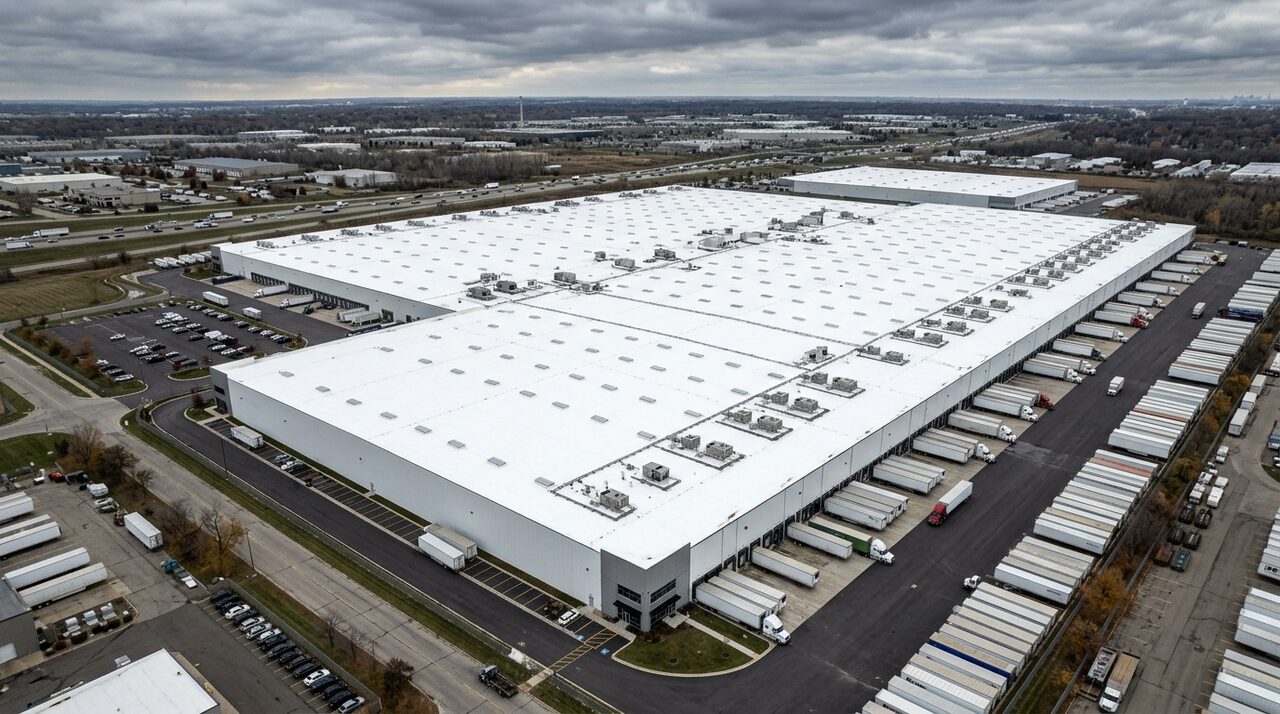
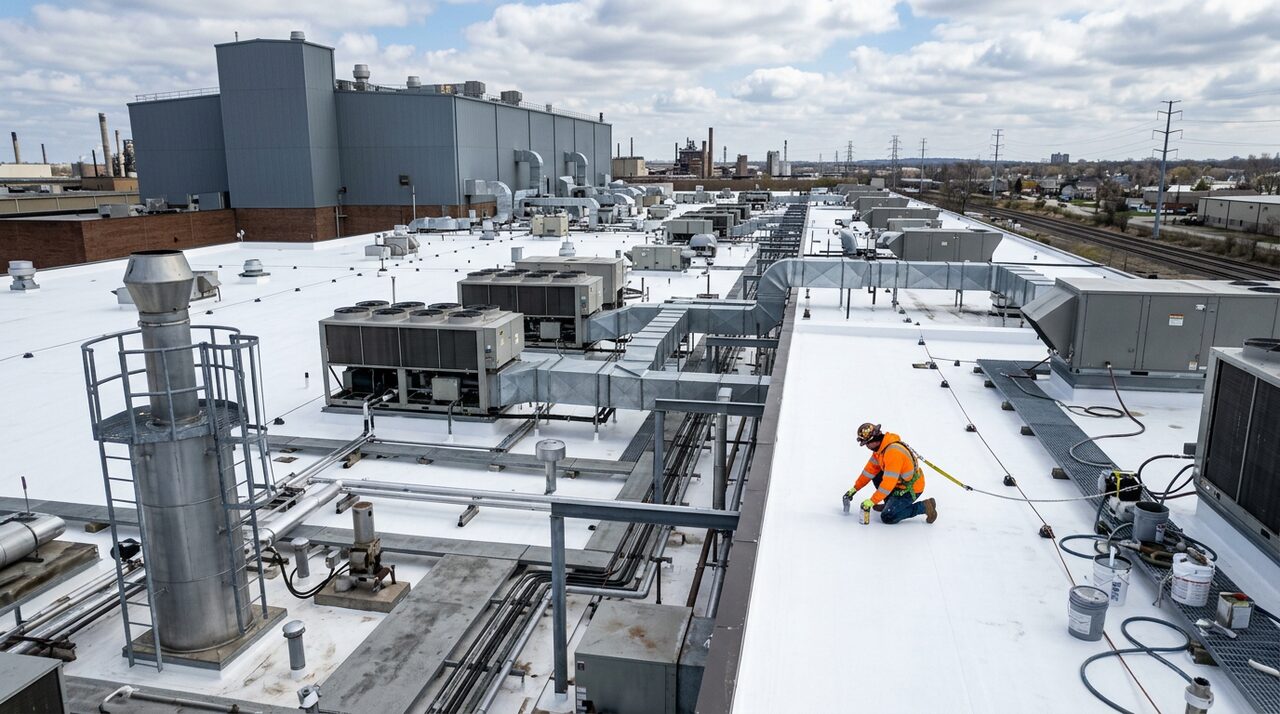
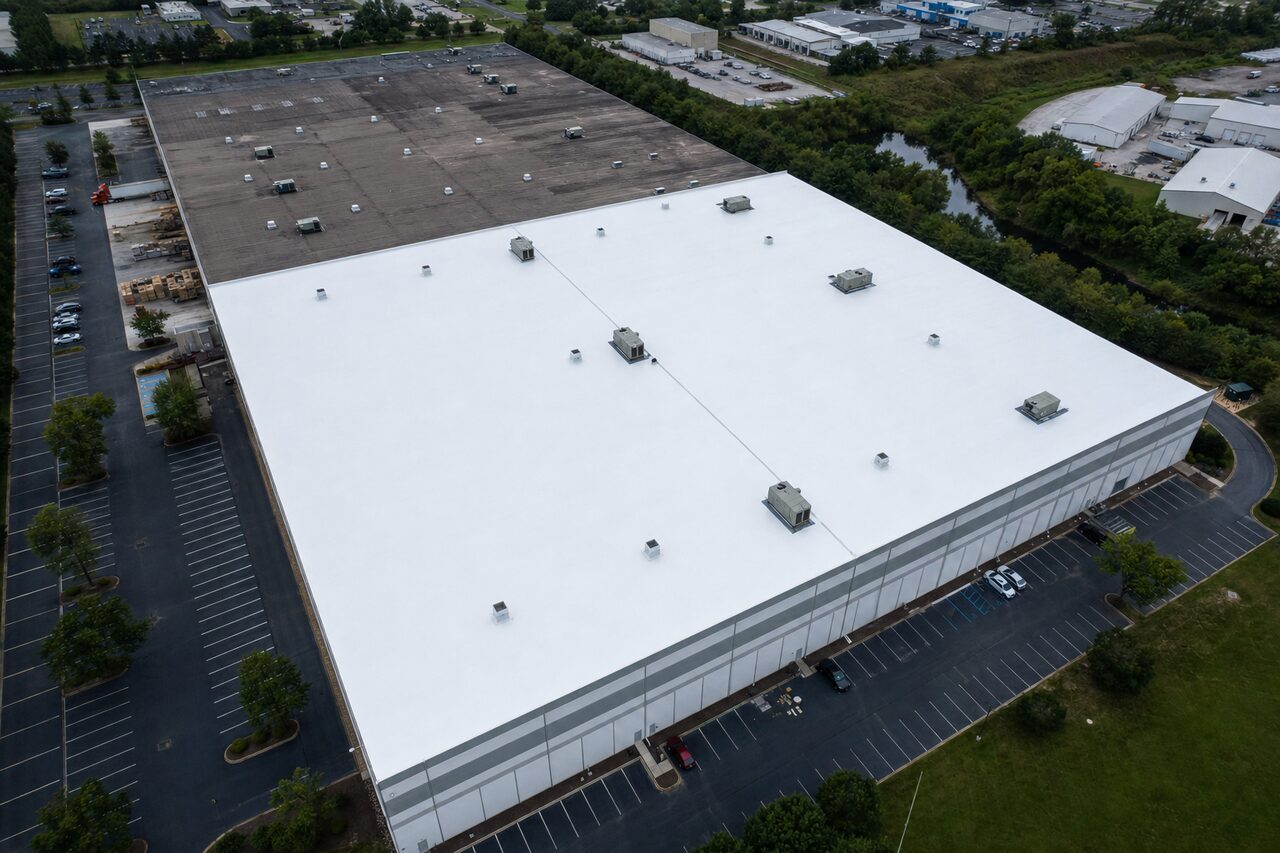
Understanding industrial roof coating cost starts with how the work is priced: by the square foot of roof area, adjusted for the condition of the existing roof and the complexity of the details. A clean, accessible single-ply warehouse roof in sound shape costs less per square foot to coat than a cut-up manufacturing roof riddled with curbs, process penetrations, exhaust stacks, and chronic ponding that needs extensive prep. That is why we never quote a price off a description — the roof itself sets the number, and we have to walk it first. The good news for industrial buildings is that the per-square-foot rate usually drops as the roof gets bigger, because mobilization and setup are spread across far more area.
What drives the price of an industrial roof coating
Several factors move an industrial coating quote up or down. None of them are mysterious, and we walk you through each one after assessing your roof:
- Roof size. Larger industrial roofs cost more in total but usually less per square foot — the economics improve dramatically on warehouse- and distribution-scale footprints.
- Existing condition. A sound membrane needs cleaning and detailing; a roof with wet insulation, failed seams, or chronic ponding needs repair work first, which adds cost. The free moisture survey tells us which one you have.
- Substrate. TPO, EPDM, metal, modified bitumen, and built-up roofs each need different prep and primer, which affects labor and materials.
- Roof complexity. Industrial roofs are penetration-dense — process stacks, rooftop units, curbs, conduit racks, skylights, and drains all require hand detailing. A busy plant roof costs more per square foot than a wide-open distribution roof.
- System & millage. The silicone thickness the manufacturer specifies for your warranty term directly affects material volume and price; a 20-year warranty carries more millage than a 10-year.
- Access & operations. How crews and material reach the roof, and whether work has to happen off-hours around live production, factors into the labor.
A worked example: a 100,000 sqft warehouse roof
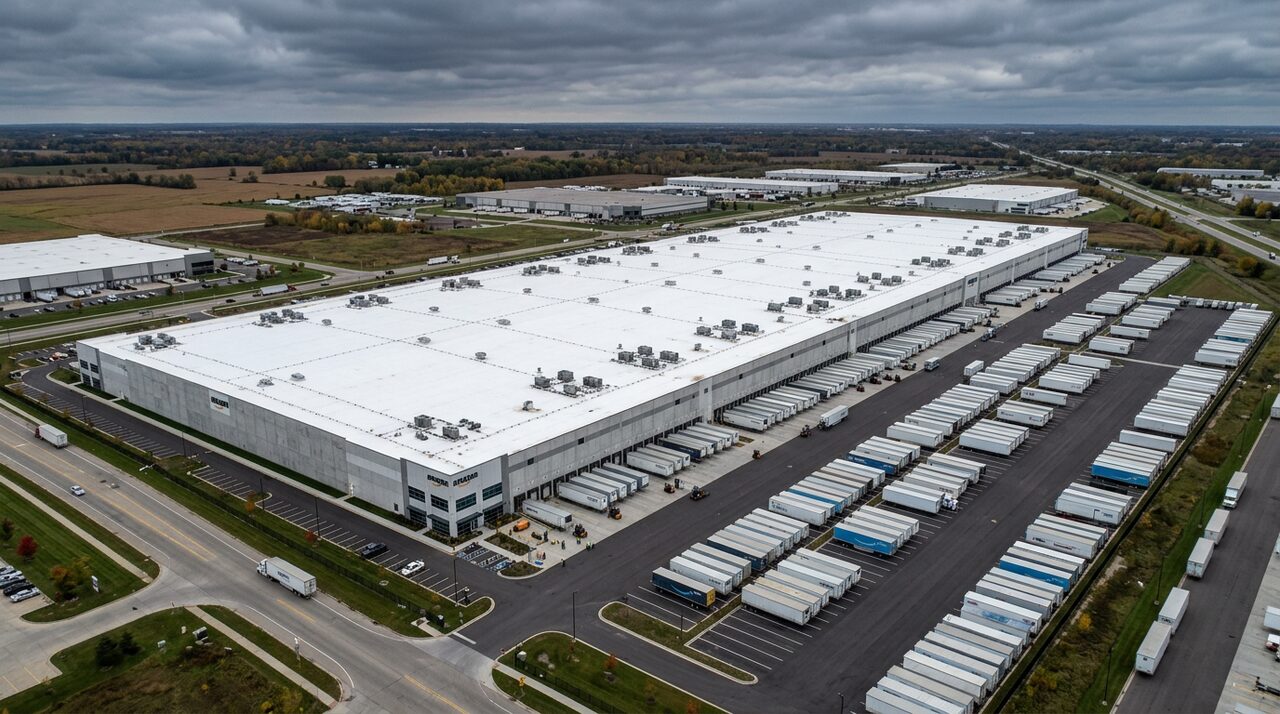
To make the numbers concrete, walk through a typical mid-size industrial restoration. Imagine a 100,000-square-foot warehouse in the Twin Cities or Sioux Falls with an aging but sound single-ply roof — some ponding, a few failed seams, and a handful of wet-insulation areas flagged by the moisture survey. A seamless silicone restoration on a roof like this generally falls in a per-square-foot band that, on a 100,000-square-foot field, adds up to a six-figure project — but one that lands at roughly half of what a full tear-off and replacement of the same roof would cost. The exact figure depends on the factors above, which is precisely why we price it from the roof, not a table.
The line items behind that number are straightforward: mobilization and setup; a full pressure-clean of the 100,000-square-foot field; targeted repairs and wet-insulation replacement in the areas the survey flagged; reinforced silicone detailing at every seam, fastener row, drain, curb, and penetration; and the seamless silicone field coat applied at the manufacturer-specified millage across the entire roof. Now compare that to replacement on the same building: demolition of the existing roof, disposal of dozens of tons of old membrane and insulation, rebuilding from the deck up, and weeks of weather exposure over the inventory below. The replacement path costs roughly double and carries risk the restoration simply does not.
The cost that never shows up on the roofing invoice
For an industrial building, the biggest number in the comparison is invisible on any roofing quote: production downtime. A tear-off opens the deck over a working warehouse, plant, or refrigerated facility for weeks; even a few days of disruption over a critical zone — a packaging line, a clean room, a cold-storage bay — can cost more than the entire roof. Because a coating restoration goes on over the existing roof while operations continue underneath, it sidesteps that hidden cost almost entirely. We stage around shifts and work off-hours where needed, so the docks and the line keep moving. When you weigh the roofing line item plus the avoided downtime, restoration usually wins by a wide margin.
The hidden value: a renewable warranty
The smartest part of the industrial coating math is what happens at the end of the warranty term. A replaced roof eventually wears out and you start the whole expensive cycle over. A coated roof can be recoated — a light, inexpensive refresh of the silicone surface — which renews the manufacturer warranty and extends the roof again. That repeatability is why a single sound industrial deck can deliver decades of waterproof service from one restoration program rather than multiple replacements. When you compare lifetime cost rather than the first invoice, coatings pull even further ahead. The reflective silicone surface adds ongoing value too, trimming the cooling and refrigeration load the building carries every summer. Our coat-vs-replace framework digs into when the trade-off makes the most sense.
Getting an accurate number for your roof
Because condition and complexity drive so much of the price, the only way to get a number you can trust is an assessment. We walk the roof, document the ponding and wet areas, inventory the penetrations and details, and then put a real figure on paper — with a clear scope of exactly what is and isn’t included, and how the project might be classified for capital versus maintenance. There is no charge for the assessment and no pressure afterward. If a coating is not the right call for your roof, we will tell you that too. To understand the work behind the price, see our silicone coating system and flat roof restoration pages. We serve industrial buildings across Minnesota and South Dakota.