Free Roof Assessment
Substrate systems · MN & SD

Industrial TPO Roof Coating

Industrial TPO roof coating restores an aging thermoplastic single-ply membrane on a warehouse, plant, or distribution building without the cost and downtime of a full tear-off. Once an industrial TPO roof passes the ten-to-fifteen-year mark, the surface oxidizes, the welded seams weaken, and the membrane shrinks and pulls at its perimeter and penetrations — exactly when a fluid-applied silicone restoration earns its keep. As the Gaco-certified applicator serving Minnesota and South Dakota, Industrial Roof Coating Pros cleans, repairs, and re-seals weathered industrial TPO with a seamless reflective system that adds ten to twenty years of watertight service life over your existing roof. Below we cover when TPO is a candidate, how the restoration works on a busy industrial roof, and why coating beats replacement.

Gaco-Certified Applicator
Licensed & Insured
Workmanship Warranty up to 20 yrs
Free Industrial Roof Assessment
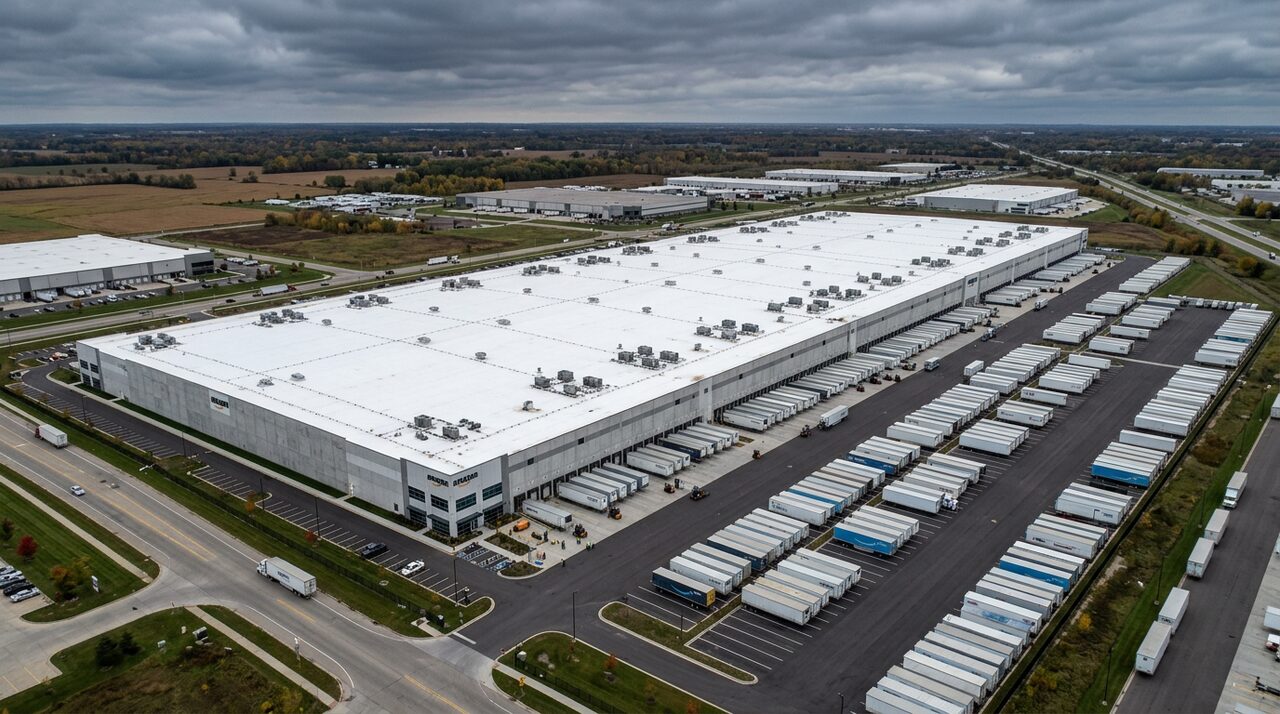
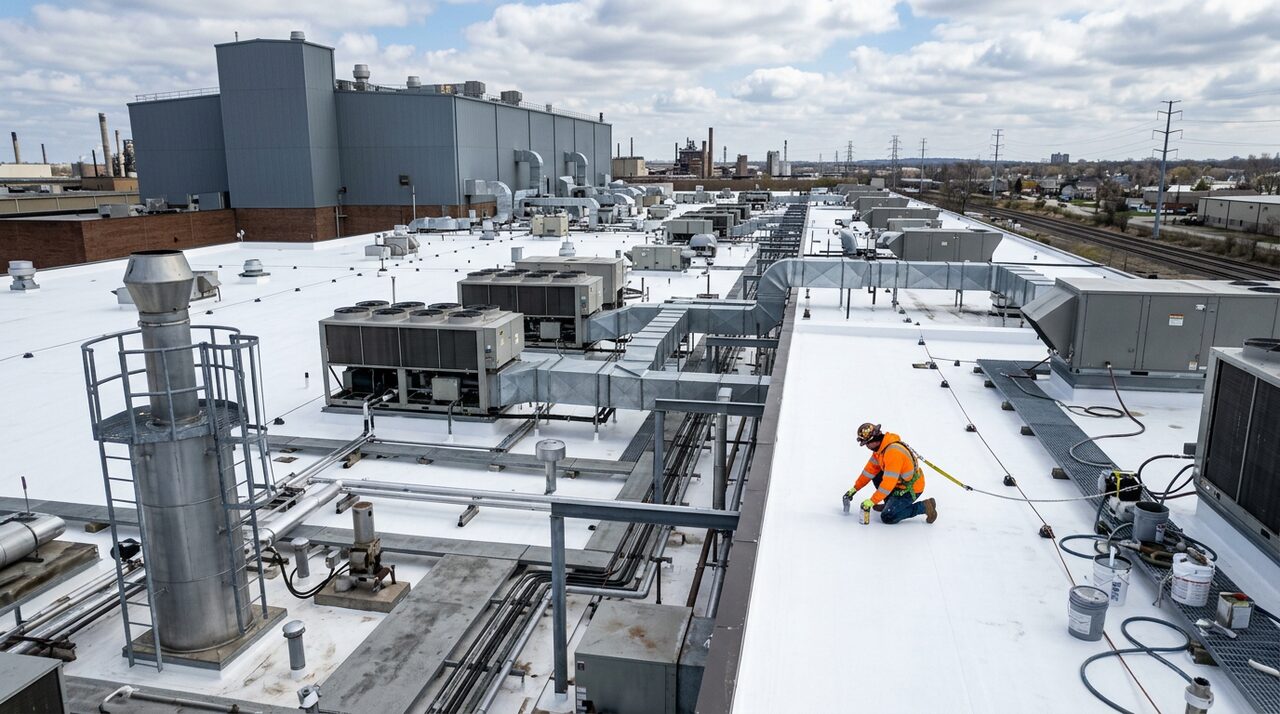
Industrial TPO roof coating restoring an aging white thermoplastic membrane on a large plant roof
Industrial TPO roof coating — a seamless silicone membrane over your existing substrate.

When aging industrial TPO is a candidate for coating

Thermoplastic polyolefin became the dominant industrial single-ply membrane because it is light, reflective, and weldable across the huge roof fields warehouses and plants demand. But TPO ages from the top down: the protective surface layer thins under UV until the reinforcing scrim is exposed, micro-cracks open at high-stress areas, and welded seams begin to peel — especially around the dense rooftop equipment industrial buildings carry. Upper Midwest freeze-thaw cycling and heavy snow load accelerate that decline. The good news is that a structurally sound industrial TPO roof, with dry intact insulation and a solid deck, is an excellent candidate for restoration. If your TPO is leaking at seams or penetrations but the field membrane is still attached and the deck is dry, coating it almost always beats replacing it. Every project starts with a free assessment and a moisture survey so you know exactly what you are working with.

How a silicone system restores industrial TPO

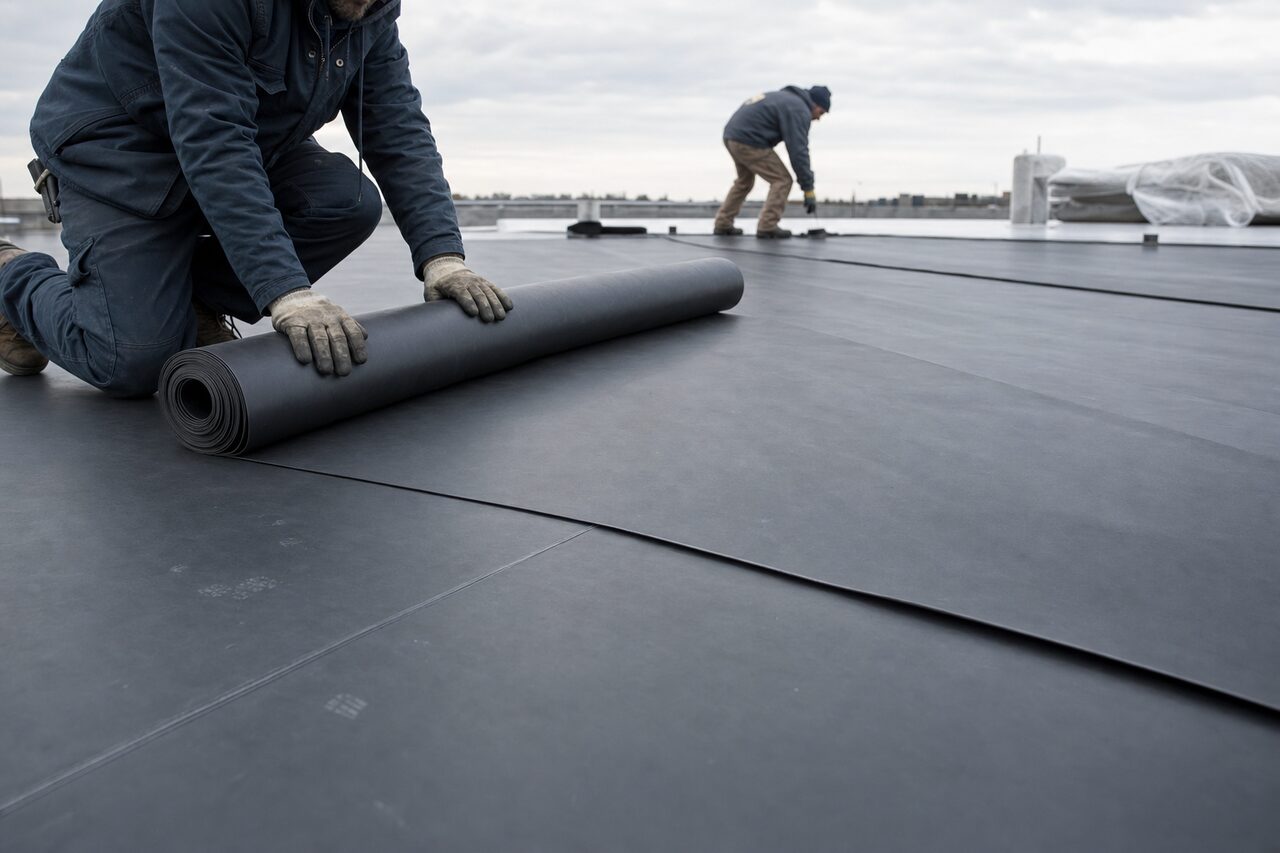
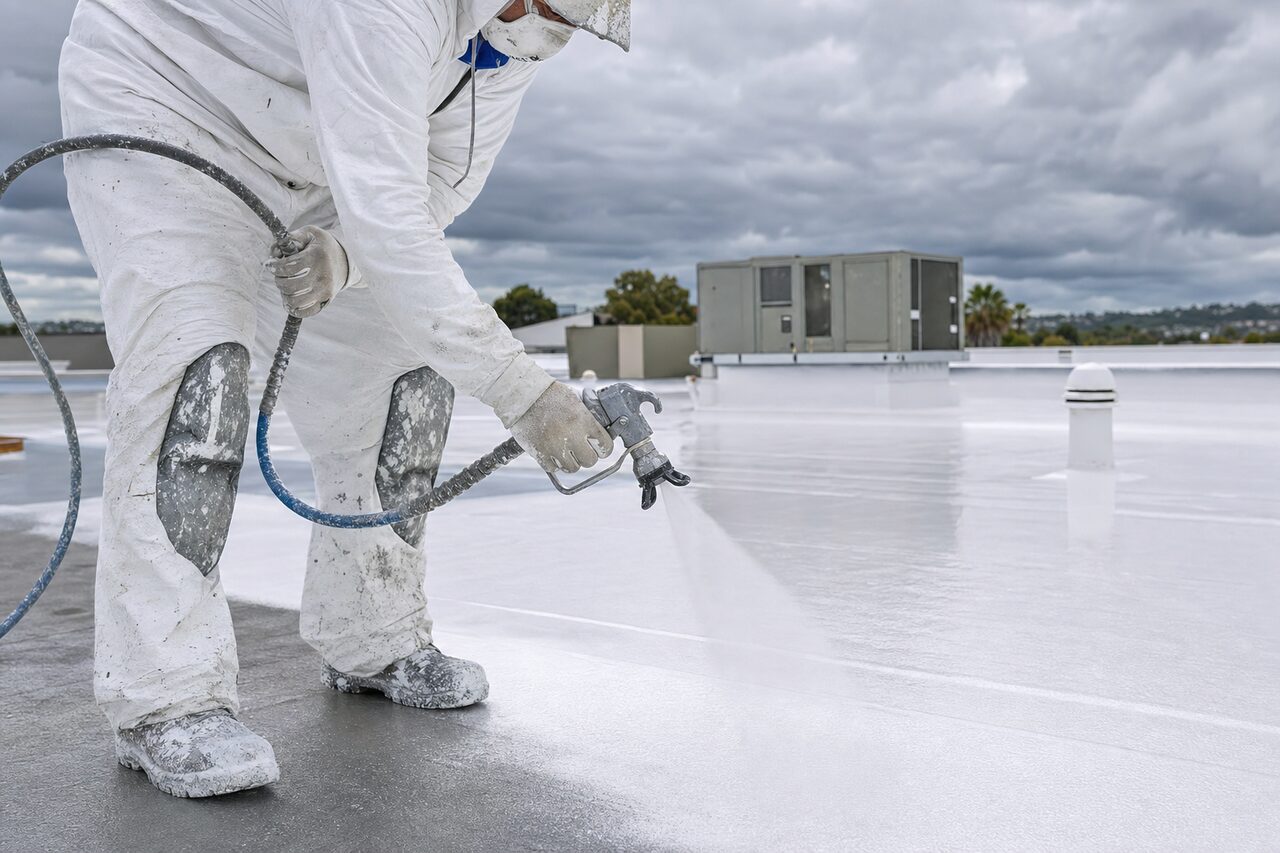
Restoring industrial TPO is a methodical, multi-step process, not a coat of paint. First we power-wash the entire roof to strip the dirt, chalk, and biological growth that would otherwise wreck adhesion. Next we reinforce every seam, penetration, and equipment curb with a polyester-fabric-embedded base layer that bridges movement and seals the weak points where TPO fails first. Then we apply a high-solids silicone base coat across the full field, followed by a reflective silicone top coat at the manufacturer-specified millage. The result is a monolithic, fully adhered membrane with no seams, no fasteners, and no laps — the exact features that fail on aged TPO. Because the system is liquid-applied, it conforms to the curbs, drains, stacks, and irregular details that are difficult to flash with sheet goods on an equipment-dense industrial roof, and the work happens from above while the building keeps running.

Reflective, energy-smart, and built for the climate

A finished silicone restoration is bright and highly reflective, which keeps the roof surface dramatically cooler in summer and reduces the cooling load on the conditioned or refrigerated space below — a benefit that compounds across acres of industrial roof. That reflectivity is not just an energy story: cooler membranes age more slowly and cycle through less thermal stress, so the entire assembly lasts longer. Silicone is also uniquely suited to this region because it stays flexible in deep cold and is essentially immune to the ponding water that destroys acrylic coatings on the slow-draining flat roofs typical of industrial buildings. For a TPO roof that ponds after every storm, silicone is the only chemistry we will specify. We are the only manufacturer-certified silicone applicator in MN and SD, holding Gaco Applicator License #345800.

Warranty, lifespan, and renewability

A properly installed silicone restoration over sound industrial TPO carries a manufacturer warranty of up to twenty years and typically delivers ten to twenty years of additional service life. When that period ends, the roof is cleaned and recoated rather than torn off — a renewable cycle that keeps the original membrane and insulation out of the landfill and your capital costs predictable. Compared with a full industrial TPO replacement, a coating restoration runs roughly half the cost, installs in a fraction of the time, never leaves the building exposed mid-project, and avoids the production downtime that often dwarfs the roofing line item. If your TPO roof is aging but the structure is sound, request a free assessment and we will give you an honest coat-repair-or-replace recommendation.

Explore our core industrial silicone coating system, flat roof restoration, and roof leak repair programs. We restore this substrate on warehouses, manufacturing plants, and distribution centers across Minnesota and South Dakota.
On the roof

Industrial roofs, restored not replaced.

Coat vs. replace

Why coat instead of tear off an industrial roof?

On most sound industrial roofs, a coating restoration costs a fraction of replacement, avoids the landfill, and — the number that matters most — keeps your production line running.

Full Tear-Off & Replace

High capital outlay + downtime
  • Production interrupted while the deck is exposed
  • Tons of old membrane hauled to the landfill
  • Weeks of weather risk over inventory and equipment
  • Booked as a full capital replacement

Silicone Coating Restoration

A fraction of replacement
  • Existing roof stays in place — the line keeps running
  • Near-zero tear-off waste to the landfill
  • Reflective surface cuts cooling load over conditioned space
  • Renewable manufacturer warranty — recoat to extend again

See the coat-vs-replace framework

Built for industry

Three industrial roofs we restore most.

Different industrial buildings fail in different ways — but the seamless silicone system that fixes them is the same proven chemistry, tuned to your substrate and your operations.

What to expect

How an industrial TPO roof coating restoration goes from assessment to warranty

We keep the process transparent from the first contact to the final walkthrough, because an industrial roof coating is a multi-year commitment and your facilities and finance teams should know exactly what they are buying. Here is how a typical industrial project unfolds once you request a free assessment.

1. Free assessment and moisture survey. We schedule a roof walk around your operations and document everything — ponding areas, wet insulation flagged by infrared or core samples, failed seams, penetrations, and flashings — with photos. You get a written assessment, not a sales pitch, and an honest call on whether a coating is the right move for your roof.

2. Written scope and proposal. We put the recommendation on paper: the system we propose, the prep and repairs included, the warranty term, the per-square-foot pricing, and the production-uptime plan. There are no surprises buried in the fine print, and we are happy to walk your finance team through how the project is classified for capital versus maintenance.

3. Scheduling around production. Industrial buildings keep running during most coating projects. We coordinate crew access, staging, lift placement, and any rooftop equipment so your line, your clean rooms, and your loading docks are disrupted as little as possible — often not at all, with off-hours work where needed.

4. Prep, repair, and reinforcement. The roof is power-washed, failed areas are repaired, wet insulation is replaced, and the trouble spots — seams, fasteners, drains, curbs, process penetrations, and wall transitions — are reinforced with fabric-embedded silicone and detail coats before any field coating goes down.

5. Seamless field coat. The silicone is applied at the manufacturer-specified millage, curing into one continuous, reflective, ponding-resistant membrane across the entire roof field — with low-odor, fast-cure formulations available for occupied and food-grade environments.

6. Final walk and warranty. We walk the finished roof with you, confirm the details, and register the manufacturer warranty. Because we are certified, that warranty is valid — and it can be renewed years from now with a light recoat instead of a full replacement.

Service area

Primary in Minnesota & South Dakota.

Our home turf is the industrial corridors of MN and SD. For large industrial bids exceeding 50,000 sqft, we also mobilize regionally and coordinate broader coverage through our parent, Sellers Roofing Company.

Common questions

Frequently asked questions

How long does an industrial roof coating last?

A properly prepped and applied silicone system carries a manufacturer warranty of up to 20 years, and because silicone is recoatable, a light refresh at the end of the term renews the warranty and extends the roof again. One sound deck can deliver decades of waterproof service from a single restoration program rather than repeated tear-offs.

Will the plant have to shut down during the work?

Almost never. Because we coat over the existing roof rather than tearing it off, crews work above while your operations continue underneath. We coordinate staging, access, and any rooftop equipment around your shifts — including off-hours and weekend work for sensitive production or clean-room environments.

Can you coat a roof that is already leaking?

Yes — as long as the deck is sound and the insulation is mostly dry, a coating restoration seals leaks at their source. We confirm the roof qualifies with a free infrared or core moisture survey before recommending the work, and we cut out and replace wet insulation so we are not sealing in a problem.

How does the cost compare to a full replacement?

A coating restoration typically runs roughly half the cost of a tear-off because you are not paying to demolish, dispose, and rebuild — and you avoid the production downtime that often dwarfs the roofing line item itself. The exact figure depends on roof size, condition, and complexity, which is why we price every industrial job from an on-roof assessment.

What does manufacturer certification actually get me?

Certification means the manufacturer has trained and audited how we prep and apply the system, and it is what makes your warranty valid. As the only Gaco-certified silicone applicator in MN and SD, we install the system exactly as its chemistry was engineered for, on roofs that have to perform under industrial loads.

Free industrial roof assessment

Get your substrate systems roof assessed — free.

Tell us what is on your roof and we’ll email you back with a straight recommendation on the right system for your substrate — no pressure, no phone tag.

  • Free, no-pressure roof assessment & moisture survey
  • Gaco-certified silicone applicator (#345800)
  • Production-uptime scheduling around your operations
  • Workmanship warranty up to 20 years
What is 8 + 2 ?
That answer isn’t right — please try again.

No phone tag — fill this out and we’ll email you back to schedule your free, no-pressure industrial roof assessment.

Got it — thank you.

We’ll reach out by email shortly to schedule your free industrial roof assessment.